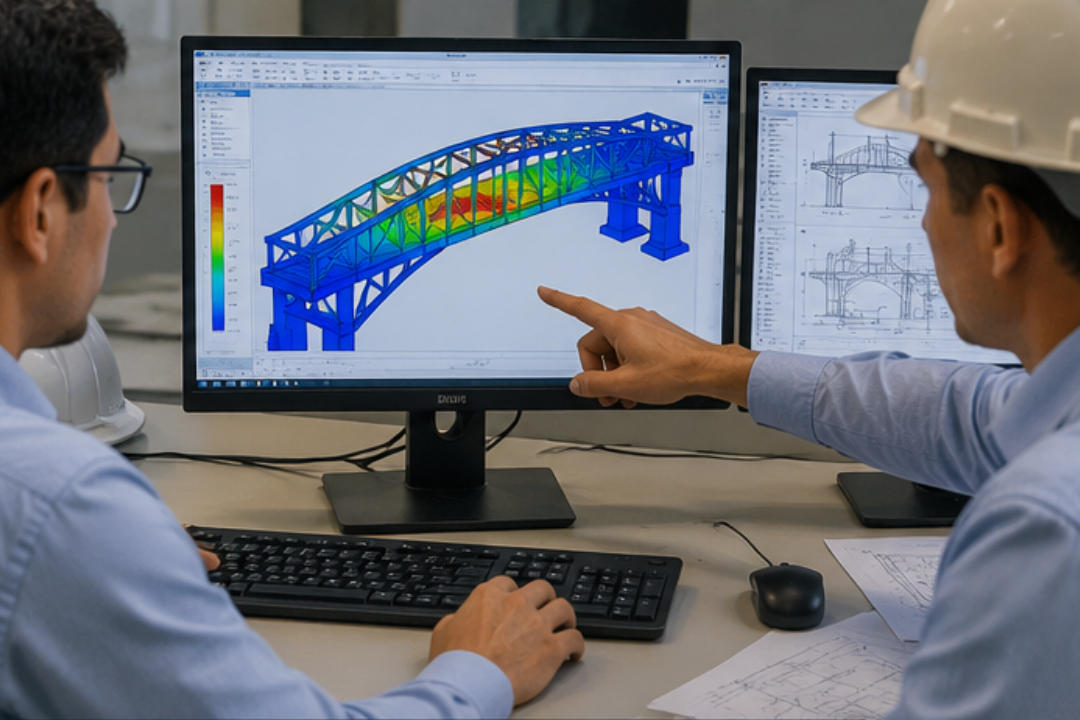
Key Loads Considered in Bridge Design
Introduction
Bridges are among the most important infrastructure assets in modern society. They connect communities, facilitate trade, improve transportation networks, and support economic growth. However, designing a bridge is far more complex than simply creating a structure that spans a river, roadway, or valley.
One of the most critical aspects of bridge engineering is understanding the various loads and forces that act on a bridge throughout its lifespan. A bridge must safely withstand not only its own weight but also the weight of vehicles, environmental forces, natural disasters, and other dynamic factors.
Failure to properly account for these loads can result in excessive deformation, structural damage, costly repairs, or even catastrophic collapse. Therefore, civil engineers carefully analyze and design bridges to accommodate all anticipated loads while ensuring safety, durability, and long-term performance.
This article explores the key loads considered in bridge design and their importance in modern civil engineering.
What Are Loads in Bridge Design?
In structural engineering, a load refers to any force, pressure, or weight that acts on a structure.
For bridges, loads may be:
- Permanent
- Temporary
- Dynamic
- Environmental
- Accidental
Engineers use design codes and standards to calculate these loads and ensure that the bridge can safely resist them throughout its service life.
Why Load Analysis Is Important in Bridge Engineering
Proper load analysis helps engineers:
- Ensure structural safety
- Prevent bridge failure
- Improve durability
- Reduce maintenance costs
- Extend bridge lifespan
- Optimize construction materials
- Meet engineering standards
Without proper load calculations, bridges become vulnerable to structural distress and premature deterioration.
1. Dead Loads
Dead loads are permanent loads that remain constant throughout the bridge’s life.
These include:
- Weight of concrete
- Steel reinforcement
- Structural steel components
- Bridge deck
- Pavement layers
- Railings and barriers
- Utility lines attached to the bridge
Dead loads are the first loads considered during bridge design because they form the foundation for all structural calculations.
Importance of Dead Loads
Engineers use dead load calculations to:
- Size structural members
- Design foundations
- Determine support reactions
- Calculate long-term structural behavior
Accurate dead load estimation is essential for bridge stability.
2. Live Loads
Live loads refer to movable or changing loads that act on the bridge.
Examples include:
- Cars
- Trucks
- Buses
- Motorcycles
- Pedestrians
- Cyclists
- Construction equipment
Traffic loads are among the most significant loads affecting bridges.
Why Live Loads Matter
Traffic volumes continue to increase worldwide, making live load analysis critical.
Engineers evaluate:
- Vehicle weight
- Traffic density
- Lane loading
- Future traffic growth
Modern bridge designs must accommodate increasing transportation demands.
3. Impact Loads (Dynamic Loads)
Vehicles moving across a bridge create dynamic effects beyond their static weight.
These effects are known as impact loads.
Factors contributing to impact loads include:
- Vehicle speed
- Road surface irregularities
- Sudden braking
- Heavy truck movement
Impact loads increase stress on bridge components and must be included in design calculations.

4. Wind Loads
Wind exerts horizontal and uplift forces on bridges.
For long-span bridges, wind effects can become extremely significant.
Wind loads can cause:
- Vibration
- Swaying
- Structural fatigue
- Aerodynamic instability
Engineers use wind tunnel testing and computational modeling to analyze wind effects on bridge structures.
Examples of Wind-Sensitive Bridges
- Suspension bridges
- Cable-stayed bridges
- Long-span highway bridges
Proper wind design ensures stability during storms and extreme weather events.
5. Seismic Loads (Earthquake Loads)
Bridges located in seismic regions must withstand earthquake forces.
Seismic loads occur due to:
- Ground shaking
- Soil movement
- Fault displacement
Earthquake-resistant bridge design includes:
- Flexible connections
- Expansion joints
- Seismic bearings
- Energy dissipation systems
Proper seismic design protects lives and infrastructure during earthquakes.
6. Thermal Loads
Temperature changes cause bridge materials to expand and contract.
Daily and seasonal temperature fluctuations create thermal stresses within bridge components.
Effects include:
- Expansion of steel members
- Concrete movement
- Joint displacement
Engineers install expansion joints and bearings to accommodate thermal movement safely.

7. Water Loads and Hydraulic Forces
Bridges crossing rivers, canals, and waterways experience hydraulic forces.
These include:
- Water pressure
- River currents
- Flood forces
- Debris impact
- Scour around foundations
Hydraulic analysis is essential for bridge safety in flood-prone areas.
8. Snow and Ice Loads
In colder climates, bridges must withstand:
- Snow accumulation
- Ice formation
- Freeze-thaw cycles
Snow and ice increase structural weight and may affect bridge performance.
Engineers account for these environmental loads during design.
9. Collision Loads
Bridges may experience accidental impacts from:
- Vehicles
- Ships and barges
- Construction equipment
Collision loads can cause severe structural damage.
Protective measures include:
- Crash barriers
- Protective fenders
- Reinforced supports
These systems help minimize damage during accidents.
10. Fatigue Loads
Repeated loading and unloading from traffic create fatigue stresses.
Over time, fatigue can cause:
- Crack formation
- Material weakening
- Structural deterioration
Fatigue analysis is especially important for:
- Steel bridges
- High-traffic bridges
- Railway bridges
Proper design helps prevent long-term structural failures.
Load Combinations in Bridge Design
Bridges rarely experience a single load at a time.
Engineers evaluate combinations such as:
- Dead load + live load
- Dead load + wind load
- Live load + seismic load
- Flood load + debris impact
Designing for load combinations ensures bridges remain safe under real-world conditions.
Modern Technologies Used in Load Analysis
Today’s bridge engineers use advanced technologies including:
- Finite Element Analysis (FEA)
- Building Information Modeling (BIM)
- Structural monitoring systems
- Load testing equipment
- Digital twin technology
These tools improve accuracy and help engineers predict bridge performance.
Importance of Professional Engineering in Bridge Design
Professional engineering firms ensure that bridge structures:
- Meet safety standards
- Resist environmental forces
- Support future traffic demands
- Minimize maintenance costs
- Provide long-term durability
Proper load analysis is one of the most important responsibilities of bridge engineers.
Conclusion
Bridge design is a complex engineering process that requires careful consideration of multiple structural and environmental loads. Dead loads, live loads, wind forces, seismic activity, thermal effects, hydraulic pressures, and fatigue loads all influence bridge performance and safety.
By accurately analyzing these loads, civil engineers can design bridges that remain safe, durable, and functional for decades. As transportation demands continue to grow, proper load assessment will remain a cornerstone of modern bridge engineering.